

Lucy, me, and Tomos (who’d just turned two) moved to Pontypridd in 2014. Rural mid Wales felt like home, but Cardiff, with its regular work and city wages, didn’t seem that far. We thought it could work.
We tried for almost a year. The neighbours were kind, the town itself generous. But Cardiff was different. Three-quarters of an hour trapped in traffic each morning, crawling to work that hollowed us out.
Eventually, a bit beat-up, we admitted defeat and turned back toward mid Wales.
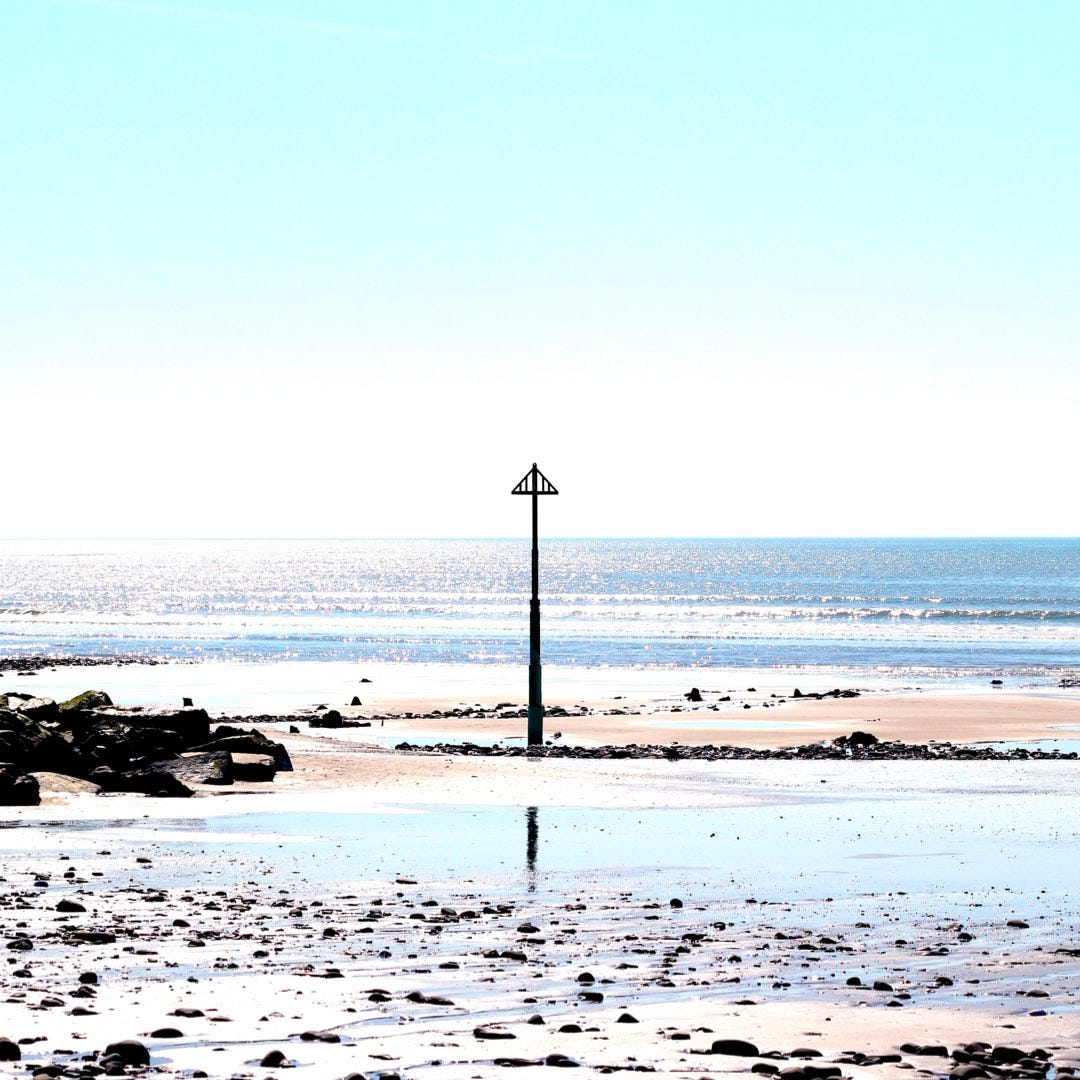
A small apartment came up in Borth, a seaside village I knew well. The building was called Ballarah, and we were on first floor, right next to that glorious beach.
My sister had lived downstairs for years and my mother had spent a childhood summer there in the ‘60s. Now it was our turn.
Returning to the Ceredigion coast felt like surfacing after being held underwater.
What I didn’t know then was that Ballarah sat close to somewhere quite special. Archaeologists from Lampeter had recently uncovered an ancient fish weir in the sand, buried for centuries.
If you know The Tale of Taliesin, you’ll understand why this matters. One version of the legend places the infant bard’s discovery in a fish-weir, right here on Borth beach.
That proximity reignited something in me, a fascination I’d carried for years. It became the foundation for my first book, Taliesin Origins.
The three of us arrived bruised, but the coast worked on us with those salty winds and the endless horizon.
Within weeks of settling in, this song completed itself. Pieces had been circling for months, then one day, after walking the beach with Tomos, it simply resolved.
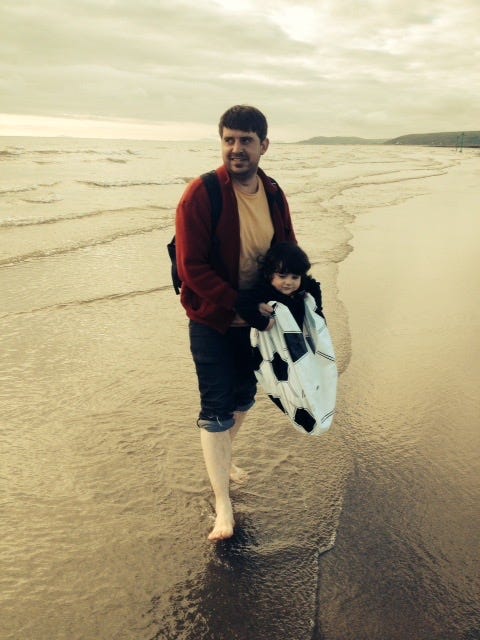
Lucy was pregnant with Melys by then, and something about that time, wounded but healing, ending but beginning, found its way into the music.